+607 509 5995
Power Factor is an index used to measure the efficient use of electricity. This index is measured on a range of 0 – 1.0. A high power-factor level indicates efficient electricity usage — and vice versa. A low power factor means high wastage of energy supplied or used.
The illustration below shows the relationship between Active Power (kW), Reactive Power (kVAR), and Apparent Power (kVA). Improving the power factor reduces the angle between kW and kVA — increasing efficiency.
(National Energy Efficiency Action Plan (NEEAP) 2016–2025) – Promotes energy efficiency to ensure productive use of energy and minimize waste in order to contribute to sustainable development, increased welfare, and competitiveness.
(National Energy Policy (NEP) 2020–2040) – Aims to improve economic resilience and ensure energy recovery while achieving equality and universal access, as well as ensuring environmental sustainability.

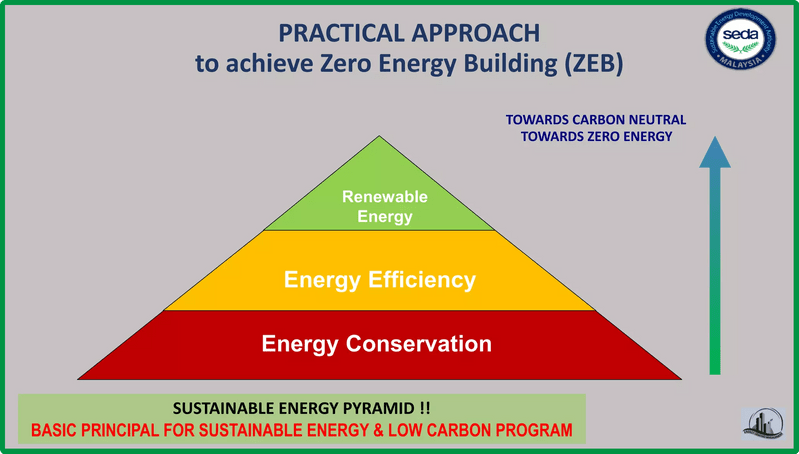
Energy efficiency can be defined as using the same or less amount of energy to produce a better output or using less energy to accomplish the same task — all while maintaining the same comfort level.

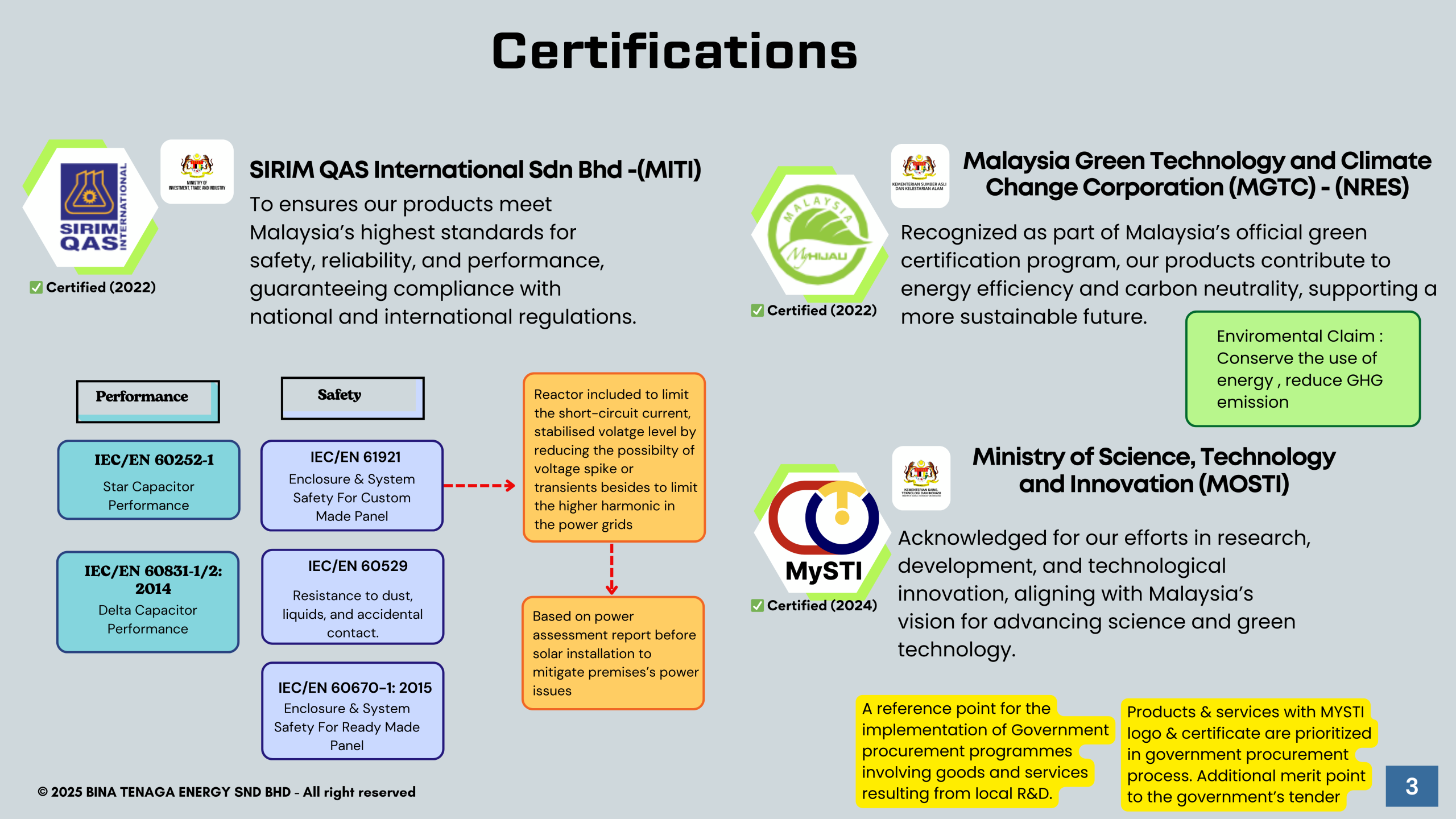
The PFCS-Binatenaga is a locally developed Smart Reactive Power Compensation System recognized for safety, innovation, and environmental excellence. It holds certifications that ensure compliance with Malaysia’s national standards and international IEC benchmarks.
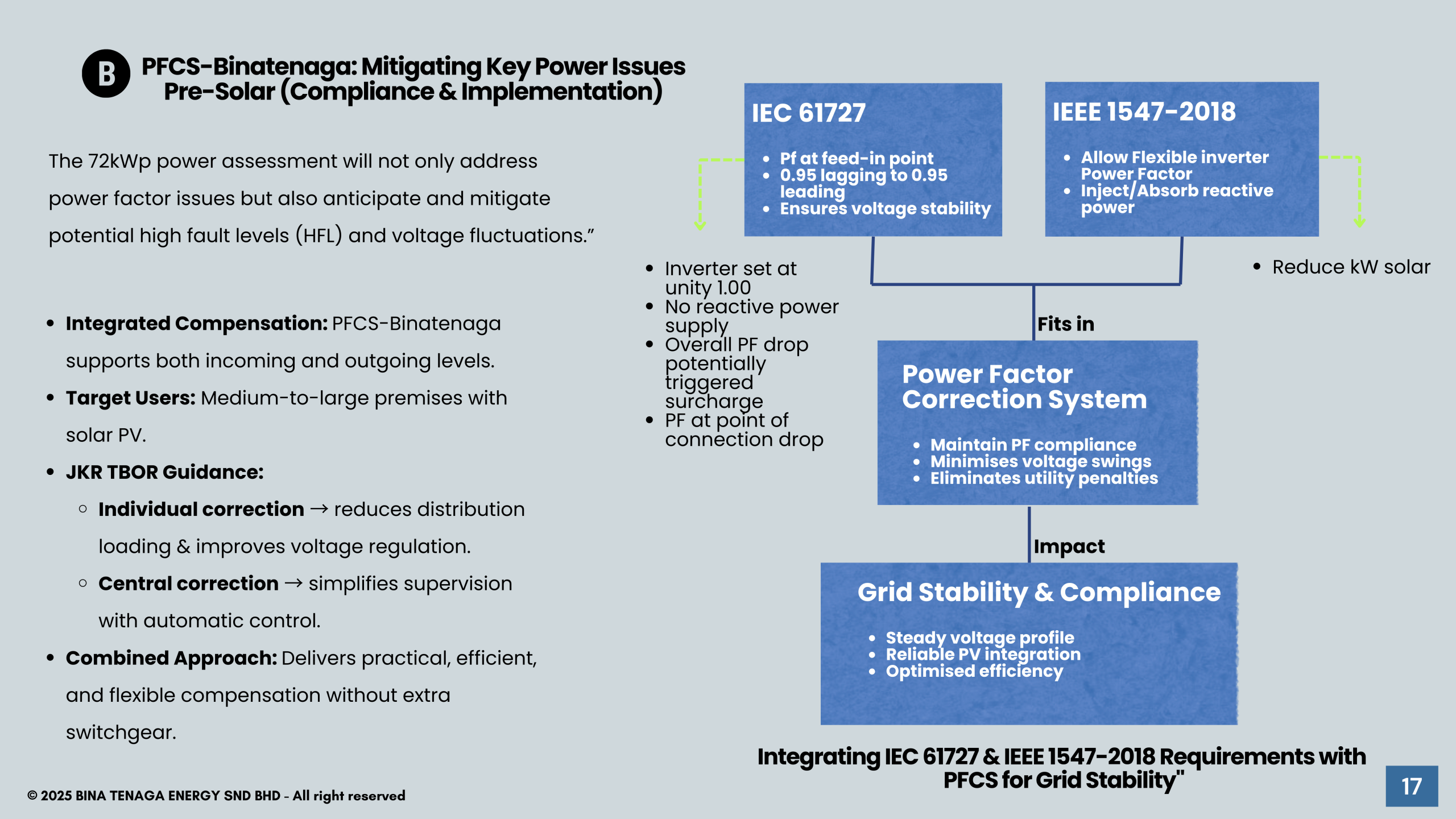
PFCS-Binatenaga tackles three major power-quality challenges in solar-integrated systems:
Equipped with IoT Monitoring, Early Warning System (EWS) and self-healing mechanisms for real-time protection and stability.
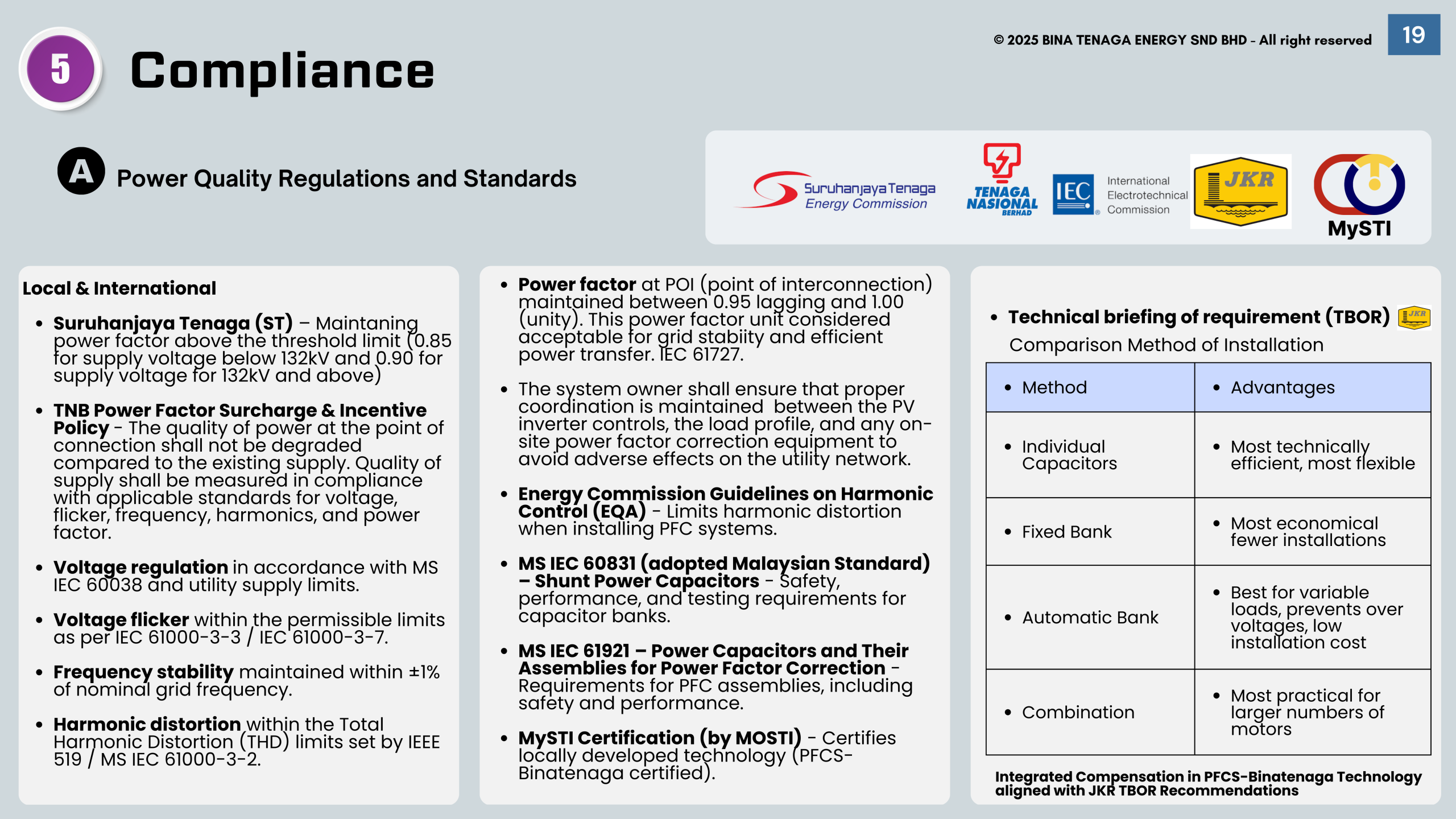
Designed to meet national and international requirements from Suruhanjaya Tenaga (ST), TNB and global bodies.
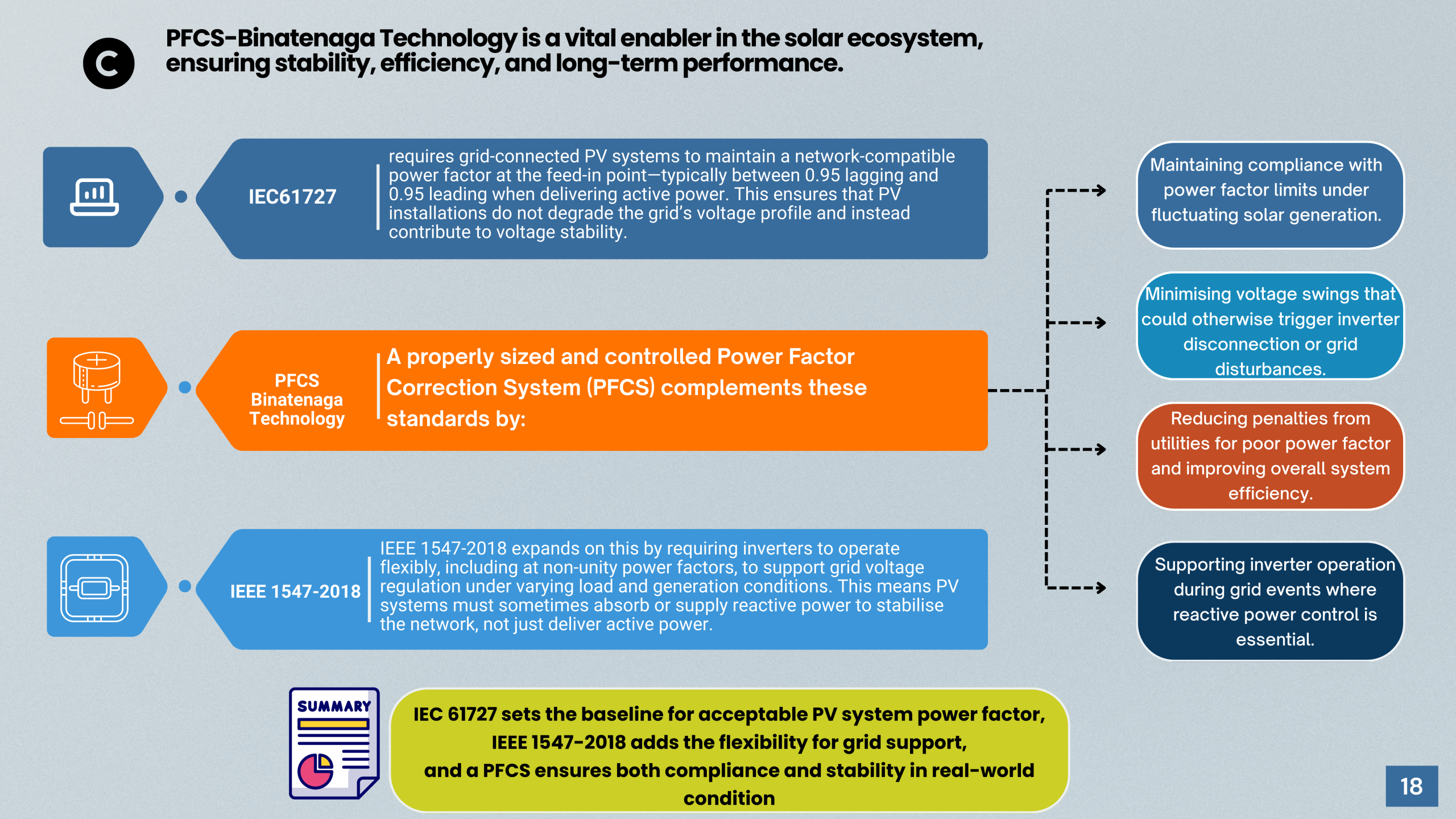
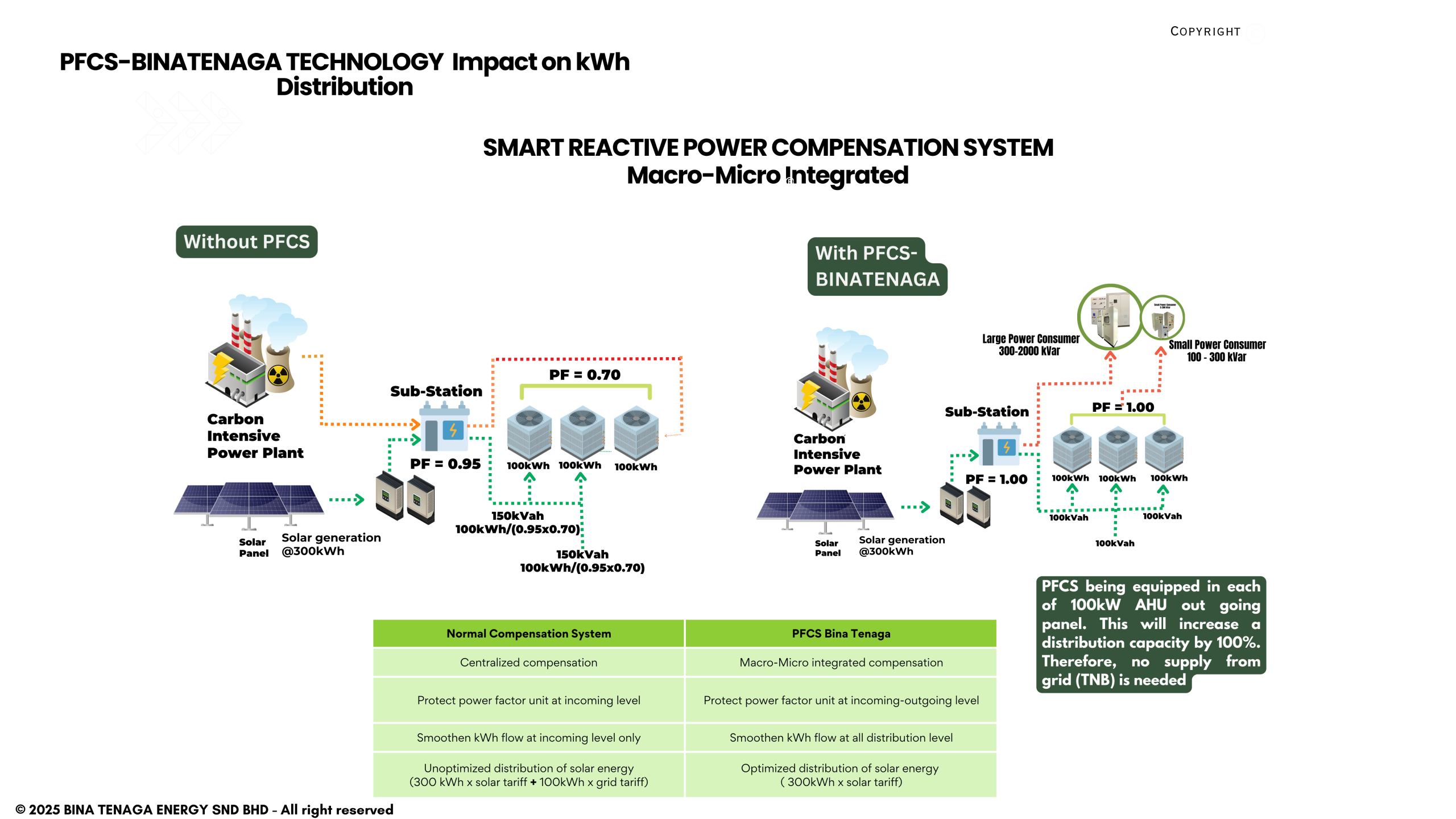
PFCS-Binatenaga integrates incoming and outgoing compensation for macro–micro control, maintaining grid stability and solar efficiency.